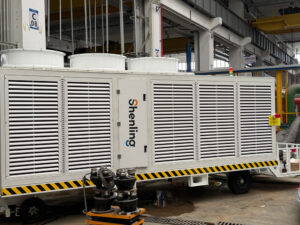
Product Overview
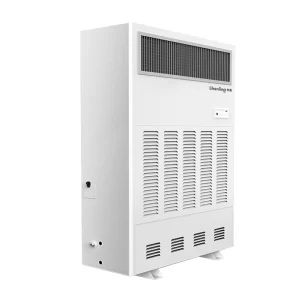
A purpose-built humidity control system for critical facilities, the Constant Humidity Unit integrates wet-membrane (evaporative) humidification with refrigeration dehumidification in one intelligent package. It automatically switches modes and continuously regulates RH to a user-selected setpoint, with remote monitoring and diagnostics for hands-off reliability. Comparable industry solutions focus on energy efficiency, modularity and compatibility with diverse water qualities.
What is a Constant Humidity Unit?
A Constant Humidity Unit is a compact environmental control module that both adds and removes moisture to hold a target relative humidity in enclosed technical spaces. Unlike standalone humidifiers or dehumidifiers, this unit is engineered to deliver uninterrupted RH stability through automatic mode switching and precise sensors.
Why Data Centers Use It
- Prevent Electrostatic Discharge (ESD) at low RH (dry air increases static risk).
- Avoid Condensation and Corrosion at high RH (moisture causes short circuits and metal corrosion).
- Support uptime and predictable equipment performance by keeping dew point and RH within safe ranges recommended for IT equipment. ASHRAE guidance and multiple industry specialists emphasize controlled RH as essential for availability and equipment longevity.
Core Applications
- Hyperscale and enterprise data centers
- Colocation facilities and edge compute rooms
- Precision equipment rooms (telecom, lab, electronics assembly)
- Archives, tape libraries, and other humidity-sensitive storage areas
Key Technical Characteristics
- Dual-Mode Operation — Wet-membrane (evaporative) humidification + refrigeration dehumidification in one unit; automatic, real-time switching for precise control.
- Intelligent Control — Freely adjustable RH setpoints, self-diagnostic routines, and RS485 (Modbus) remote monitoring for BMS/EMS integration.
- High Stability & Low Noise — Designed for smooth airflow and minimal acoustic footprint in sensitive environments.
- Durable Wet-Membrane — Flame-retardant and antibacterial membrane material compatible with varying water qualities for safe, hygienic humidification.
- Safety & Protections — Multi-level leak detection, overflow protection, and water-quality tolerance to reduce maintenance risk.
System Integration & Controls
- ative RS485 / Modbus support plus optional BACnet gateway for seamless BMS integration.
- Alarm outputs, SNMP traps via gateway, and local UI with historical RH logging.
- Factory-calibrated humidity sensors and optional redundant sensors for high-availability rooms.
Installation & Maintenance
- Modular skid or rack-mount options for inline or room-mount installations.
- Easy access to membrane tray, filter, and condensate/overflow lines for rapid service.
- Recommended planned maintenance: membrane inspection and water treatment checks per site water quality and operating hours.
Compliance & Standards
Designed to meet/align with industry environmental guidelines for IT equipment and precision spaces (see ASHRAE TC 9.9 for humidity ranges). Units can be specified to meet local electrical and safety codes — include country-specific certifications at order stage.
Benefits
- Single-package dual function (humidify + dehumidify) — saves footprint and simplifies controls.
- Protects servers from ESD and corrosion — reduces risk of downtime.
- Remote monitoring & self-diagnostics — lowers on-site operator load.
- Water-tolerant membrane with antibacterial properties — safer humidification.
- Energy-efficient mode switching — uses evaporative humidification where possible to cut operating cost.
FAQ
Q1: What RH range can the Constant Humidity Unit maintain?
A1: The unit can be configured to maintain a wide RH range (typical control setpoints used in IT environments are between ~20%–80% RH). For data centers, we recommend tuning setpoints to the range advised by ASHRAE TC 9.9 and your operator policy.
Q2: How does the unit switch between humidification and dehumidification?
A2: Built-in control logic monitors humidity sensors in real time and automatically engages wet-membrane evaporative humidification when RH is below setpoint and refrigeration dehumidification when RH exceeds setpoint — seamless mode switching ensures continuous RH stability.
Q3: Is the wet-membrane safe for server room use?
A3: Yes — our wet-membrane is flame-retardant and treated with antibacterial properties; it is designed to tolerate a range of water qualities. Site water treatment is recommended to optimize membrane life and reduce maintenance.
Q4: Can I monitor and control the unit remotely?
A4: Yes — standard RS485 (Modbus RTU) is provided for integration with BMS or monitoring systems; optional BACnet/IP or gateway solutions are available for SNMP/remote SCADA integration.
Q5: Does it prevent static electricity and condensation?
A5: By maintaining RH within the selected band, the unit reduces the risk of ESD (low RH) and condensation/corrosion (high RH). Proper setpoint selection relative to temperature and dew point is essential.
Q6: What maintenance is required?
A6: Routine checks include membrane inspection/cleaning, filter replacement, leak and overflow sensor tests, and verifying water treatment systems. Specific intervals depend on water quality and operating hours; we provide a maintenance checklist in the datasheet.
Q7: Are there options for 50Hz and 60Hz power supplies?
A7: Yes — electrical configurations for 50Hz and 60Hz systems are available; specify your regional supply at order time so we deliver the correct control and compressor setup.
Q8: Can the unit be deployed in colocation facilities and hyperscale data centers?
A8: Yes — modular models and multiple capacities make the unit suitable for small edge rooms to larger colocation halls. For hyperscale, we recommend a site survey to determine optimal placement and redundancy strategies.
Q9: How energy-efficient is the system?
A9: The unit uses evaporative humidification where possible (lower energy use) and refrigeration dehumidification only when needed. This hybrid approach often provides better energy performance than refrigeration-only humidification systems.
Q10: Do you offer technical integration support and validation?
A10: Shenling provides engineering support for integration with your existing HVAC/BMS, on-site commissioning assistance, and documentation including wiring diagrams, control sequences and maintenance guides.