


The Rise of R290 Heat Pumps in Europe
Something remarkable is happening in the global heating industry. For decades, homes relied on gas boilers, oil furnaces, and other fossil-fuel systems to stay warm. Today, those technologies are rapidly losing ground to something far cleaner and smarter: heat pumps.
Across Europe, governments, engineers, and homeowners are embracing this shift with surprising speed. The continent now hosts over 24 million installed heat pumps, collectively cutting millions of tons of carbon emissions every year.
But within the heat pump revolution, one refrigerant has become the new star: R290 (propane).
Why the sudden excitement?
Because environmental regulations are tightening fast. The EU’s F-Gas Regulation requires a dramatic phase-down of high-GWP refrigerants by 2030, pushing manufacturers toward natural alternatives. R290, with a Global Warming Potential (GWP) of only 3, has become the obvious choice.
The results are already visible.
- In Germany, 45% of new heat pump installations in 2023 used R290 technology.
- In Sweden, the share of R290 heat pumps in certain segments jumped from 34% to 51% in just one year.
- The global R290 heat pump market is expected to grow over 10% annually for the next decade.
These numbers reveal a clear truth: R290 heat pumps are not a niche product anymore—they are the future of residential heating.
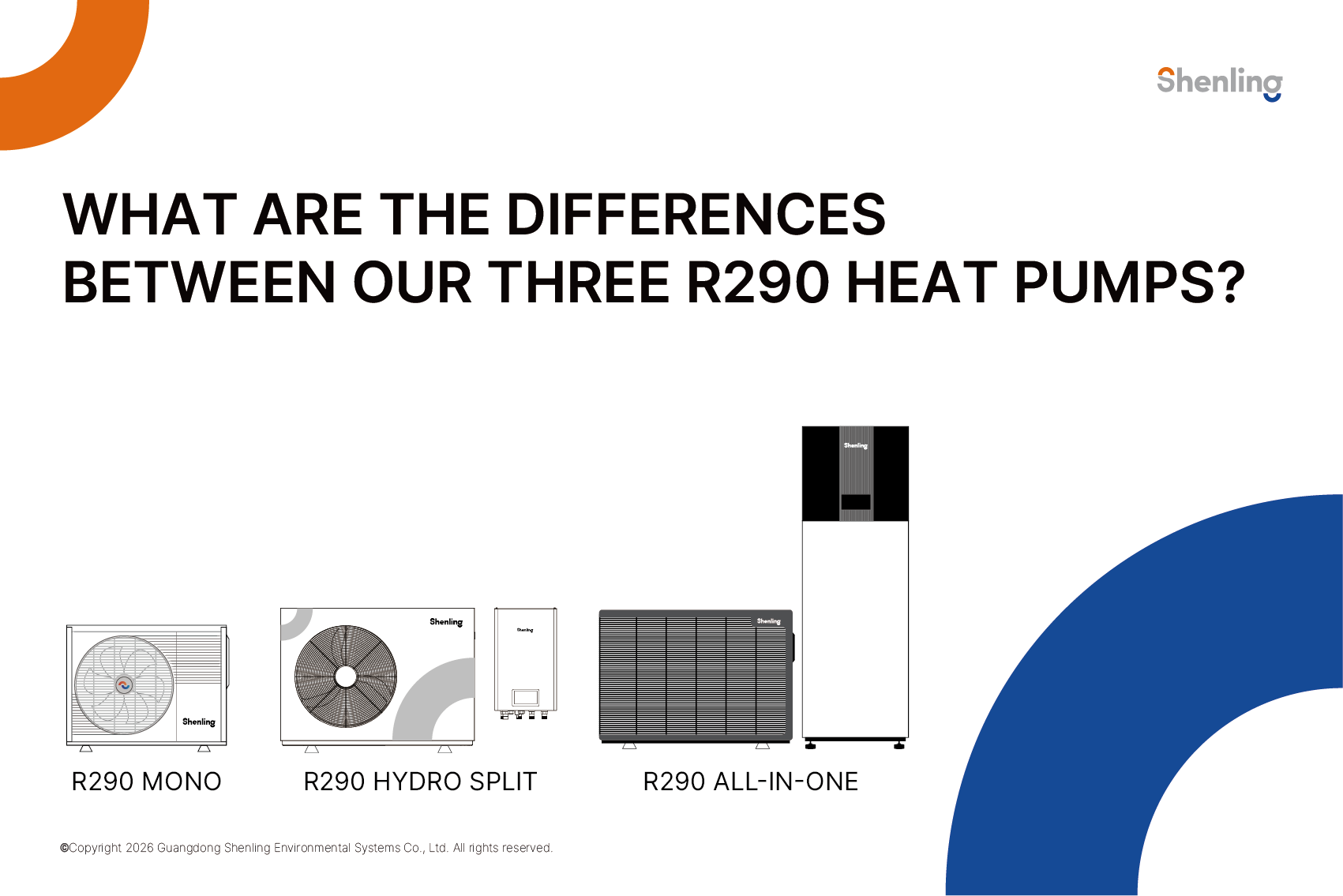
And within this rapidly growing market, several system designs have emerged, each with unique advantages. Among them, three solutions stand out: Monobloc, Hydro Split, and All-in-One systems.
Understanding the difference between them could save installers time, homeowners money, and distributors countless headaches.
Let’s explore.
What Are R290 Heat Pumps?
At its core, a heat pump is a device that moves heat rather than generating it. Instead of burning fuel like a traditional boiler, it extracts heat from the environment—air, water, or ground—and transfers it into a building.
An R290 heat pump simply uses propane as its refrigerant to carry heat through the thermodynamic cycle.
Think of it like a sophisticated heat transporter.
Even when the outside air feels freezing, it still contains thermal energy. The heat pump captures that energy, compresses it, and delivers it indoors as warm water or heating.
This simple principle allows heat pumps to reach efficiency levels far beyond traditional heating systems.
Many modern R290 units can achieve seasonal efficiency ratings (SCOP) above 4.5, meaning they produce over four units of heat for every unit of electricity consumed.
That’s not just efficient—it’s transformative.
Why R290 Is Called the “Green Gold” of HVAC
If refrigerants were superheroes, R290 would be the quiet genius saving the planet.
Traditional refrigerants such as R410A or R134a carry extremely high environmental impacts. Some have GWPs thousands of times higher than CO₂.
R290, on the other hand, changes the entire equation.
Here’s why engineers love it:
| Feature | R290 | Typical Synthetic Refrigerant |
| Global Warming Potential | 3 | 2000+ |
| Ozone Depletion Potential | 0 | Varies |
| Energy Efficiency | High | Moderate |
| Future EU Compliance | Yes | Increasingly restricted |
Because of this ultra-low environmental footprint, R290 is already being described as the “green gold” of the heat pump industry.
And the benefits don’t stop at emissions.
R290 also offers:
- Higher thermodynamic efficiency
- Higher water outlet temperatures (up to 75–80°C)
- Lower operating pressures in some designs
- Strong compatibility with radiator retrofit projects
For installers dealing with older European homes, that last advantage is a game-changer.
How R290 Heat Pumps Work
The operating cycle of an R290 heat pump may sound complicated, but the concept is beautifully simple.
It follows four basic steps:
- Evaporation
The refrigerant absorbs heat from outdoor air and evaporates. - Compression
A compressor squeezes the refrigerant gas, raising its temperature dramatically. - Condensation
The hot gas releases heat into the home’s water system. - Expansion
The refrigerant cools and returns to its liquid state.
Then the cycle repeats—again and again.
This continuous process means the heat pump doesn’t create heat—it relocates it. That’s why efficiency can exceed 400%.
Once you understand this mechanism, the next logical question appears:
If all heat pumps work this way… why are there different system designs?
Why Air-to-Water R290 Systems Are Dominating Residential Heating
Among the various heat pump types, air-to-water systems have become the dominant choice for residential buildings.
Unlike air-to-air heat pumps, these systems heat water instead of air. That heated water can then supply:
- Radiators
- Underfloor heating
- Fan coils
- Domestic hot water tanks
This flexibility makes them incredibly versatile.
High Temperature Output for Radiator Retrofits
One of the biggest barriers to replacing gas boilers has always been temperature.
Old radiator systems often require 60–70°C water to maintain comfort during winter.
Earlier heat pumps struggled to deliver such temperatures efficiently.
R290 solved that problem.
Thanks to its excellent thermodynamic properties, many R290 heat pumps can deliver flow temperatures up to 75–80°C.
That means existing radiator systems can stay in place—no expensive floor heating retrofit required.
For European homeowners, that’s a massive advantage.
Efficiency and Energy Savings
Another reason R290 heat pumps are exploding in popularity is simple: energy bills matter.
Compared with gas boilers, heat pumps can reduce heating energy consumption by 30–70% depending on climate and insulation levels.
When combined with solar PV or smart grid systems, the savings become even more impressive.
Imagine heating your home with energy captured from the air… while your rooftop solar panels power the system.
That’s not science fiction anymore.
It’s today’s HVAC reality.
Overview of Shenling’s Three Residential R290 Heat Pumps
Within the R290 heat pump category, three system designs dominate residential installations.
Each addresses different installation scenarios and customer needs.
Shenling’s product lineup illustrates this diversity perfectly:
1.ThermaX R290 Monobloc Air-to-Water Heat Pump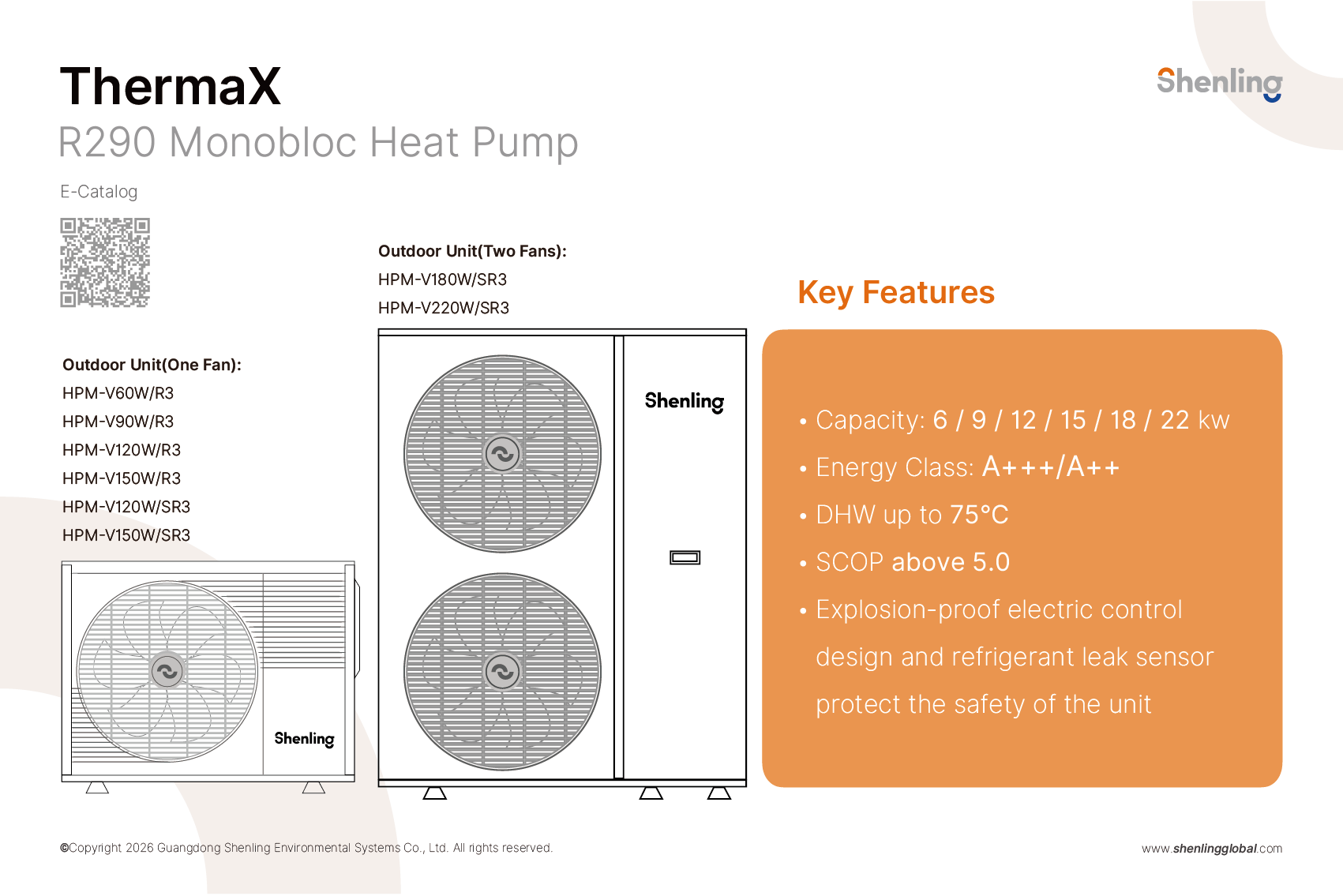
R290 Monobloc Air-to-Water Heat Pump
2.ThermaX PRO R290 Hydro Split Heat Pump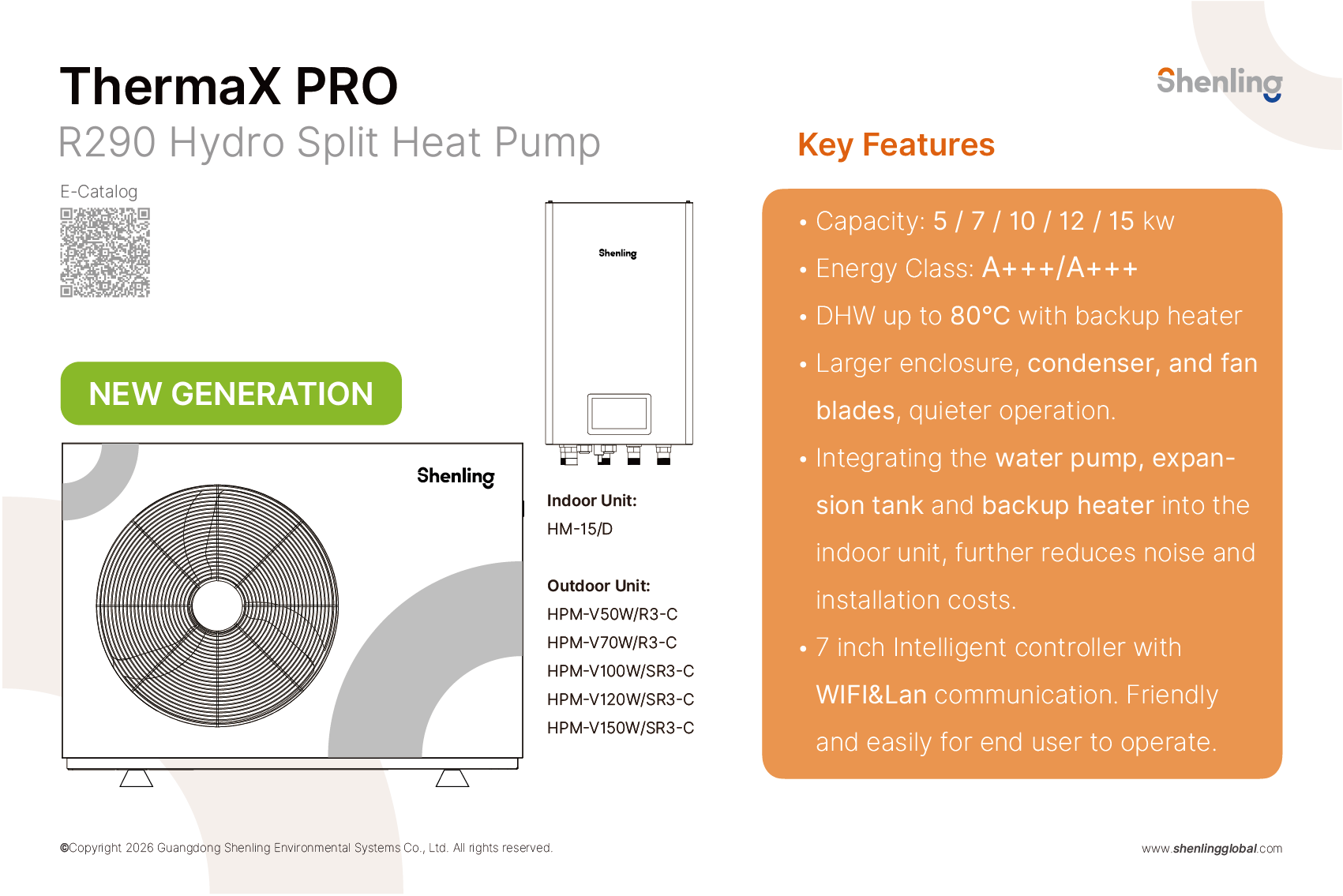
R290 Hydro Split Heat Pump
3.ThermaX R290 All-in-One Heat Pump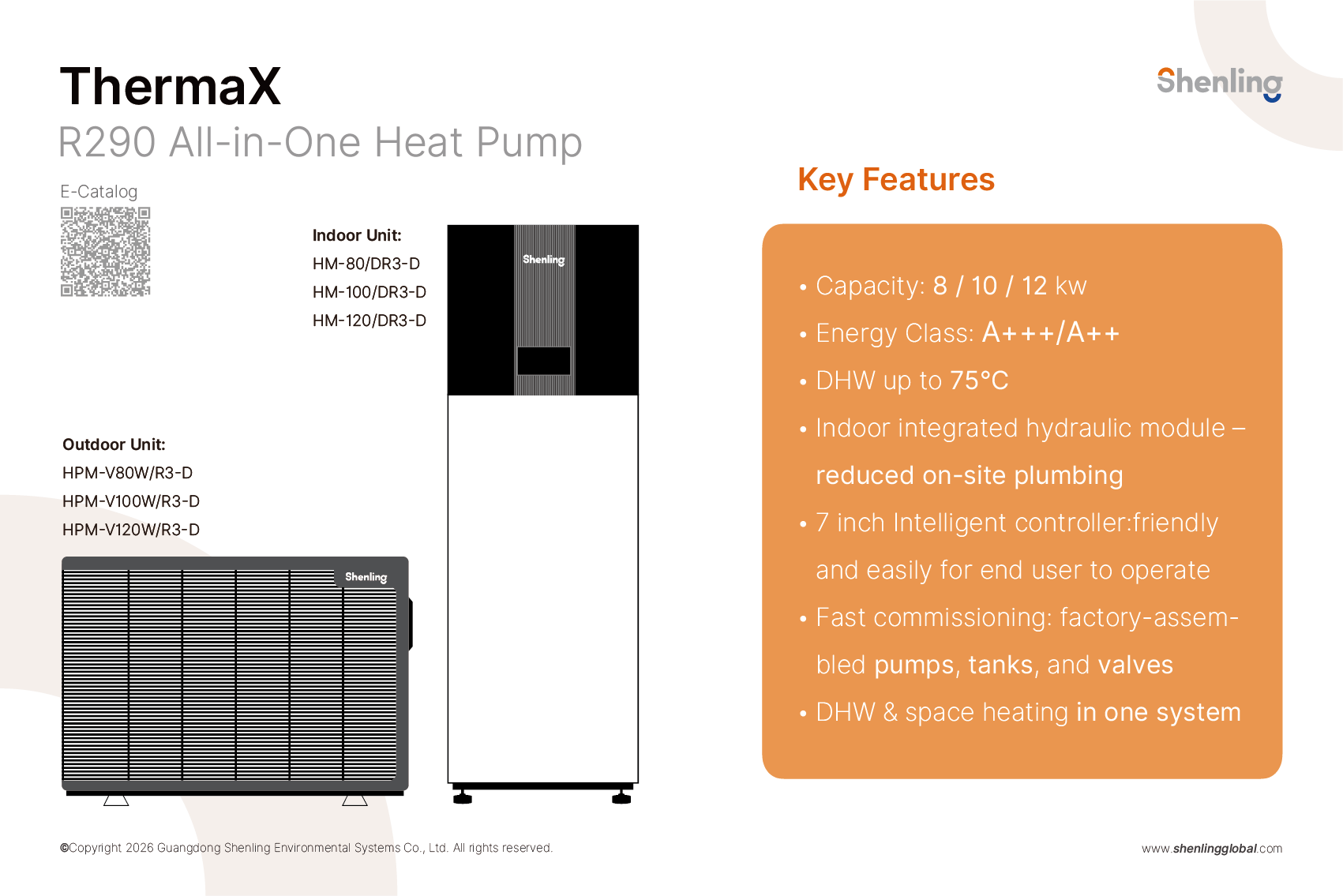
R290 All-in-One Heat PumpAt first glance they may seem similar.
All three deliver heating, cooling, and domestic hot water.
But under the hood, their architecture and use cases differ significantly.
Let’s break them down.
ThermaX R290 Monobloc Heat Pump
The Monobloc system is the most straightforward design in the heat pump world.
All key components are housed in a single outdoor unit, including:
- Compressor
- Condenser
- Plate heat exchanger
- Circulation pump
Installation is surprisingly simple.
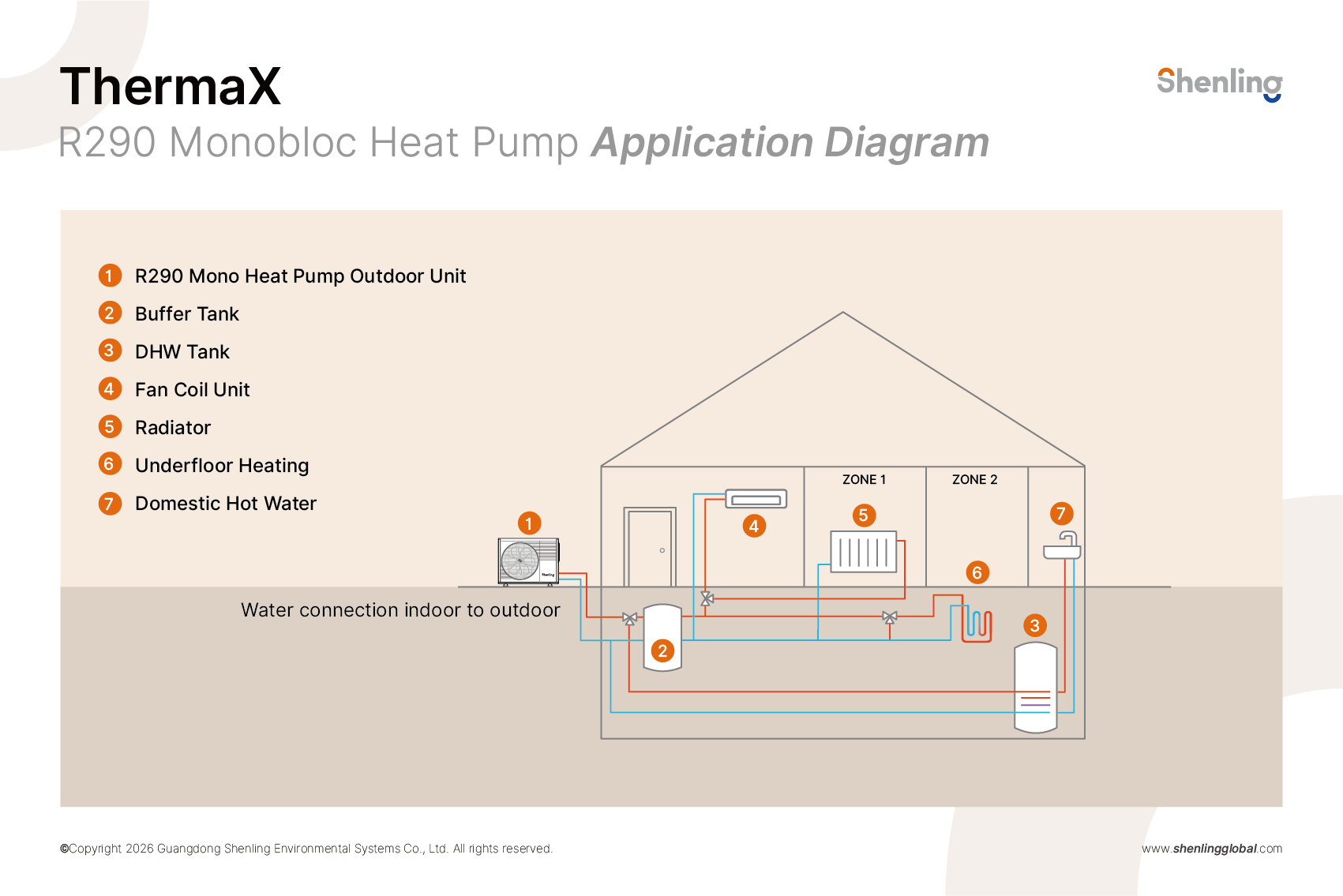
Figure: ThermaX R290 Monobloc Air-to-Water Heat Pump Installation Diagram
Instead of refrigerant piping, installers only need to connect water pipes between the outdoor unit and the building.
That means:
- Faster installation
- Lower labor requirements
- Reduced refrigerant handling risk
The ThermaX Monobloc also shines in cold climates.
It can operate at ambient temperatures as low as −25°C, making it suitable for northern European regions.
Because it can deliver 75°C water, it works beautifully as a boiler replacement solution for existing homes.
In many retrofit projects, this design offers the perfect balance between simplicity and performance.
ThermaX PRO R290 Hydro Split Heat Pump
If the Monobloc is the practical workhorse, the ThermaX PRO Hydro Split is the premium athlete.
This next-generation system was engineered specifically for professional installers, distributors, and high-performance residential projects.
Its design separates the system into two units:
- Outdoor refrigerant unit
- Indoor hydraulic module
This architecture unlocks several advantages.
First, it improves system integration and serviceability. Installers can access the indoor hydraulic components without opening the outdoor unit.
Second, it enhances control and intelligence.
The ThermaX PRO includes a complete smart IoT control ecosystem, including:
- 7-inch touch display
- Wi-Fi and LAN connectivity
- Cloud monitoring
- OTA firmware updates
In terms of efficiency, it delivers A+++ seasonal performance at both 35°C and 55°C, which places it among the top tier of residential heat pumps.
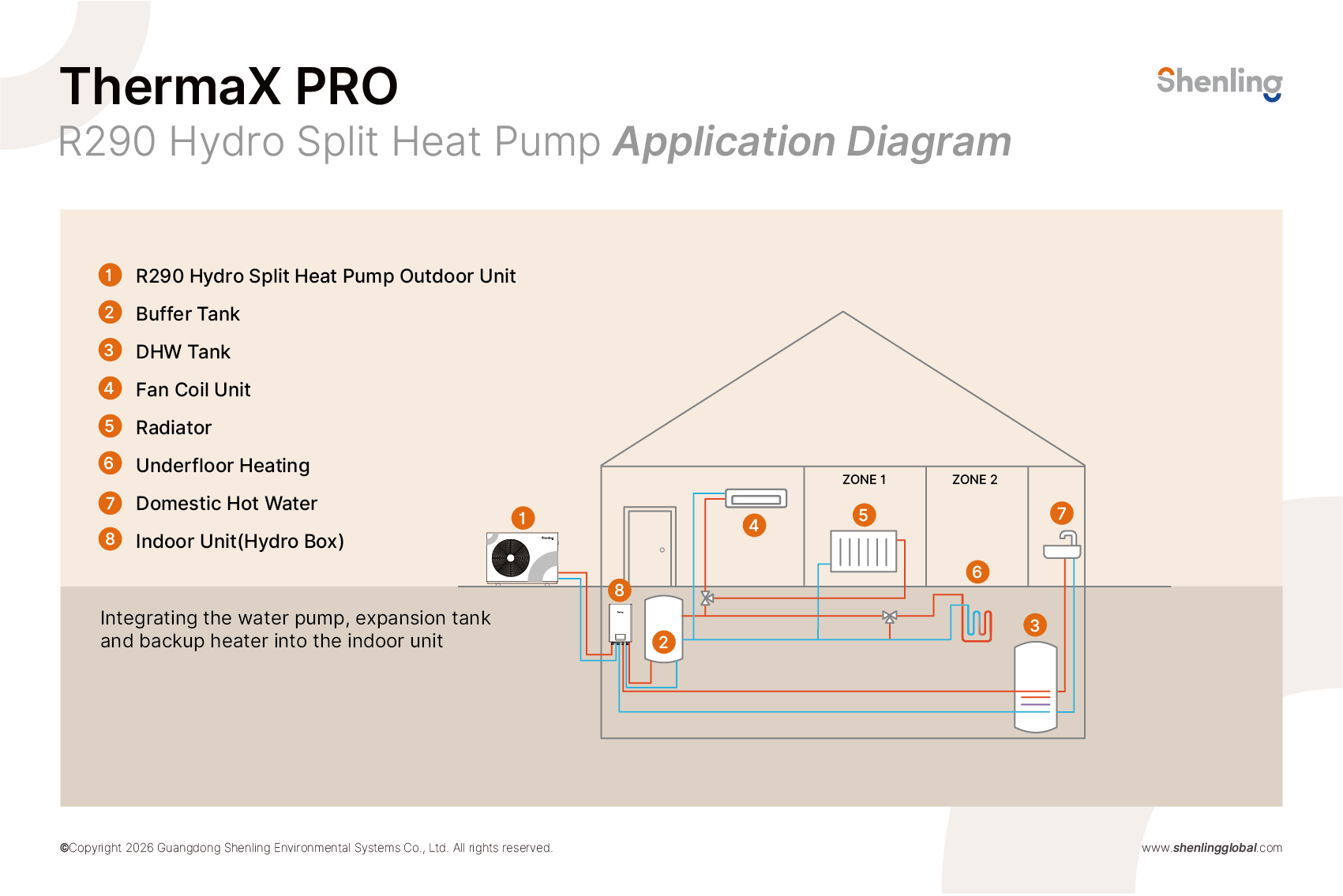
Figure: ThermaX PRO R290 Hydro Split Heat Pump Installation Diagram
For modern smart homes, it’s like upgrading from a basic smartphone to a flagship model.
Everything becomes smoother, smarter, and more connected.
ThermaX R290 All-in-One Heat Pump
Now imagine combining a heat pump with a fully integrated indoor heating station.
That’s exactly what the All-in-One system delivers.
This configuration includes:
- Outdoor R290 heat pump unit
- Indoor hydraulic module with integrated tanks
Inside the indoor unit you’ll find:
- Buffer tank
- Domestic hot water tank
- Pumps and valves
- Expansion vessels
- Intelligent control system
The beauty of this design lies in installation convenience.
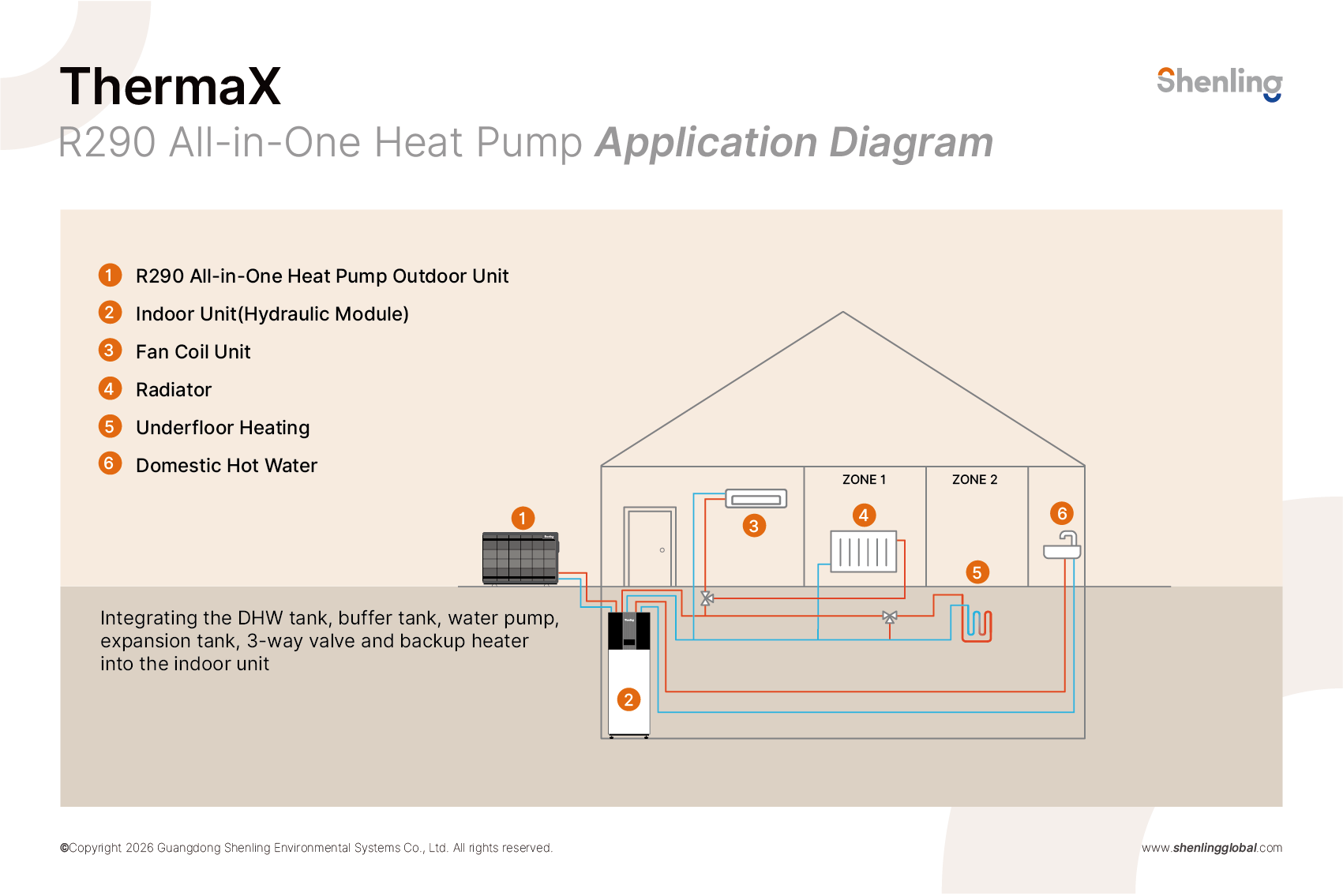
Figure: ThermaX R290 All-in-One Heat Pump Installation Diagram
Instead of assembling multiple components separately, installers receive a complete hydraulic solution in one cabinet.
Another key advantage is safety.
The entire water circuit remains indoors, while the refrigerant system stays outside.
This design enhances reliability, simplifies maintenance, and aligns well with European safety regulations.
For new homes or renovation projects seeking a tidy mechanical room, the All-in-One system is incredibly appealing.
Detailed Comparison of the Three R290 Heat Pumps
Now comes the real question.
How do these three systems actually compare?
Let’s examine the critical factors installers and distributors care about.
Installation and System Design Differences
The biggest difference between the three systems lies in system architecture.
The Monobloc is the simplest design—everything in one outdoor unit.
Hydro Split systems separate refrigerant and hydraulic circuits.
All-in-One solutions add an integrated indoor hydraulic station.
Each approach serves different project types.
For example:
- Monobloc: ideal for fast boiler replacement
- Hydro Split: best for premium smart heating systems
- All-in-One: perfect for integrated new-build installations
Installers often choose based on space constraints, installation speed, and system complexity.
Efficiency and Smart Control Comparison
All three models benefit from the inherent efficiency of R290 technology.
Its advanced control platform allows:
- Remote monitoring
- System optimization
- Firmware updates
- Energy performance tracking
These features can significantly improve seasonal efficiency in real-world operation.
However, the ThermaX PRO Hydro Split also has LAN communication capabilities..
The Monobloc and All-in-One systems still deliver excellent performance, but their control capabilities are typically simpler.
Safety and Refrigerant Design
Safety is always a key concern with propane refrigerant.
Because R290 is flammable, systems must include advanced protection measures.
Modern R290 heat pumps typically include:
- Sealed refrigerant circuits
- Leak detection sensors
- Controlled refrigerant charge limits
- Proper ventilation design
Monobloc systems offer a natural advantage here.
Since the refrigerant circuit remains entirely outdoors, no refrigerant enters the building.
Hydro Split and All-in-One systems also maintain strong safety engineering through careful refrigerant management and compliance with international standards.
Application Scenarios
Different buildings demand different heat pump architectures.
Here’s how the three systems typically fit into the market:
- Monobloc
Ideal for boiler replacements and straightforward retrofits. - Hydro Split
Best suited for advanced smart homes and premium residential projects. - All-in-One
Perfect for new constructions or renovation projects requiring compact mechanical rooms.
Understanding these scenarios helps distributors guide customers toward the right solution.
Comparison Table: Three R290 Heat Pumps at a Glance
| Feature | ThermaX Monobloc | ThermaX PRO Hydro Split | ThermaX All-in-One |
| System Design | Single outdoor unit built in water circuit pipeline | Outdoor + indoor hydro box | Outdoor + integrated indoor hydraulic station |
| Installation | More flexible and free installation | Simplification of indoor water pipeline installation | Highly integrated water system, ready for use upon connection. |
| Smart Controls | Advanced IoT system, APP, WiFi | Advanced IoT system, APP, WiFi, LAN | Advanced IoT system, APP, WiFi |
| DHW Capability | 75°C without backup heater | Up to 80°C with backup heater | 75°C without backup heater, Integrated tank |
| Best Application | Boiler retrofit | For countries with high noise restrictions, such as Germany, Netherlands, Switzerland, UK | New buildings |
Which R290 Heat Pump Should You Choose?
Choosing the right heat pump is a little like choosing the right vehicle.
Each one gets you where you need to go—but the journey feels different.
If you want simplicity and reliability, the Monobloc is the obvious choice.
If you want maximum efficiency, smart controls, and premium performance, the Hydro Split stands out.
If you want an integrated heating center with minimal installation complexity, the All-in-One system is incredibly attractive.
There’s no universal “best” option.
Only the best option for a specific building, installer, and customer.
The Future of Residential Heating Is Already Here
Heating technology is entering a new era.
Driven by climate policy, energy costs, and innovation, heat pumps are rapidly replacing fossil-fuel heating across the world.
And at the center of this transformation stands R290.
With ultra-low environmental impact, high efficiency, and excellent high-temperature performance, R290 heat pumps offer something rare:
A solution that is both sustainable and practical.
For homeowners, installers, and distributors alike, this technology is not just the future.
It’s the present.
Conclusion
The rise of R290 heat pumps marks a turning point in residential heating.
Three system designs—Monobloc, Hydro Split, and All-in-One—offer different advantages depending on installation needs, building type, and performance expectations.
The Monobloc system delivers simplicity and reliability for boiler replacement projects.
The Hydro Split system pushes the boundaries of efficiency and smart control.
The All-in-One system integrates heating and hot water into a compact, installer-friendly package.
Together, they represent the next generation of sustainable HVAC solutions.
And as energy systems continue to evolve, one thing is certain:
The homes of tomorrow will almost certainly be heated by high-efficiency heat pumps powered by natural refrigerants like R290.
FAQs
- What makes R290 better than traditional refrigerants?
R290 has an extremely low Global Warming Potential of 3, compared with thousands for many synthetic refrigerants. It also offers higher efficiency and better compatibility with high-temperature heating systems.
- Are R290 heat pumps safe to use in homes?
Yes. Modern R290 heat pumps include sealed circuits, safety sensors, and strict design standards that ensure safe operation even though propane is flammable.
- Can R290 heat pumps replace gas boilers?
Absolutely. Many R290 air-to-water heat pumps can deliver water temperatures up to 75°C, making them suitable for traditional radiator systems.
- What is the difference between Monobloc and Split heat pumps?
Monobloc systems place all components in one outdoor unit, while split systems divide the refrigerant and hydraulic components between indoor and outdoor units.
- Do R290 heat pumps work in cold climates?
Yes. Many modern systems can operate in temperatures as low as −25°C, making them suitable for northern European climates.